• About
  • Visit Gray Star Design
  • Minted Collection
  • Design Services
  • Contact

The Design Inspirationalist

~ Inspiring Ideas | Spectacular Creations

The Design Inspirationalist

Category Archives: Guest Posts

Tips for Organizing Your Closet

26 Monday Nov 2012

Posted by melissaoconnor in Everyday Design, Guest Posts, Kim Willington, The Home

≈ 2 Comments

Tags

closets, Clutter, Donate, Hangers, Helpdesksoftware.org, Hooks, Kim Willington, organization, shelves, space, Vertical Space

Closets start to become the refuge for everything else in your home that you don’t have a proper space for or just haven’t taken the time to classify. It’s easier to throw something on a shelf or on the floor of the closet to get it out of the way than it is to properly organize your space.

Bedroom closets are prone to even more clutter and mess with piles of clothes, shoes, scarves, ties, and handbags crammed into every last space. Not only does it make it hard to find the things you need when your closet has reached such a state, but it also brings down the feel of the room, creating clutter and tension.

It is important to get your closet organized to free up the space you need and to create a  pleasing, relaxing space. Here are a few tips for how you can get your bedroom closet organized:

Clear the Clutter
Before you can start organizing the things you need in your closet, you have to first get rid of the things you don’t need. Sort through all your clothes, all your shoes, all your accessories and ruthlessly cut the waste.

Donate the items that you haven’t worn in several months. Stop hanging on to those jeans you think you’re going to wear after you lose 10 pounds. Get rid of those shoes you hang onto for a special occasion. It is better to buy these things again when you actually need them than to waste your time and your mental energy maintaining them.

Use Hooks and Shelves
Most closets have a basic rod and top shelf, creating only limited space for hanging clothes and storing boxes. You can create more opportunities for storing and hanging by adding more shelves and hooks. Use the shelves for folded clothes, shoes, boxes, and handbags. Use the hooks for ties, scarves, handbags, and necklaces.

Guest Post: Tips for Organizing Your Closet
Photo Credit: The Container Store

Creating this additional space will give you more opportunities to organize your items so that your belongings are not cramped and cluttered.

Choose Tiered Hangers
You can only create so much space with more rods or shelves. If your closet is very small or you just have too many clothes to fit comfortably in it, you can create more space by using tiered hangers. These hangers lock onto one another vertically to allow you to hang up to five items in the space of one. You may not be able to use them for bulky items like sweaters, but you can use them for most other items, creating much more space in your closet.

Be sure that the rod in your closet is strong or is reinforced. By using tiered hangers, you are significantly adding to the weight on the bar.

Do Double Duty
Take advantage of all the space in your closet by making some items do double duty. Suitcases can be used to store linens like tablecloths and sheets, or you could use them to store last season’s clothes. Handbags can stores scarves, hats or mittens — or even other handbags.

Don’t store items that you will use on a regular basis, such as clothing. You’ll only create more work for yourself when you go into your closet, and the point of organizing is to make life more simple.

Create Vertical Space
Don’t limit yourself to the width of your closet. Create more space by storing all the way up to your ceiling. No, we don’t mean piling clothes and boxes as high as they will go. Instead, add shelves and other storage devices  all the way to the ceiling. You can create space over the door and along the sides, as well. You can even create a basket on the ceiling that can hold wrapping paper or similar items.

Guest Post: Tips for Organizing Your Closet
Photo Credit: HomeSessive

Organizing your bedroom closet is a first step towards creating a simpler, cleaner space in your bedroom. These simple steps can take your closet from a cluttered mess to an orderly space that makes it easy for you to find what you need and makes you feel good about your living space.

Guest Post: Tips for Organizing Your Closet
Photo Credit: The Buffalo News

How do you organize your bedroom closet? Share your strategies in the comments!

Written by Kim Willington
Restoration Blues

24 Saturday Nov 2012

Posted by melissaoconnor in Everyday Design, Guest Posts, James Harper, The Home

≈ Leave a comment

Tags

diy, home, interior design, Momentum, restoration

Taking on a home restoration project is a lot of work; when you move in to a period home, it’s easy to be enthusiastic about the potential – you can imagine what the home will look like once you have an authentic looking (but still suitably modern and luxurious) kitchen, an exquisite period fireplace, and historically faithful, heavy and imposing period doors. Your home, you tell yourself, will be a mini mansion.  All it will take is a bit of research and elbow grease.

Sadly, that initial enthusiasm rarely lasts for the whole project. Before you move in to the house, you’ll fix the floorboards, replace and re-paint the oak skirting, seal the windows, and do all of the critical work, but as the job drags on, your energy levels will naturally wane.

Restoration Blues
Photo Credit: Mark F. Levisay

Keeping the Momentum Going
For most people, the lack of energy isn’t down to a lack of interest, or laziness; far from it! The problem, put simply, is real life getting in the way. While it’s easy to devote a weekend or two to fixing up your skirting boards and sourcing authentic looking period doors, it takes far longer to re-do the entire bathroom, or source the right tiles to sort out your roof. If you have a full time job, finding the time and energy to take on another full time job in the form of home restoration is almost impossible.

Once your home gets up to a “liveable” level, you can be forgiven for thinking “I’ll get to it later” when it comes to the more time consuming tasks. So, how can you break out of the restoration blues?

Inspire Yourself
Many people invest in a period home, or a classical barn, and restore it piece by piece based on their mental image of what the place should look like. Instead of relying on your imagination, why not invest in some computer aided design software so that you can see a “real” version of your home in front of you. This will help you to stay motivated, and understand that while you’re “almost there”, your home will look even more awesome when it’s done.

Remove Access
If you’re prone to making excuses such as “Well, I don’t have the marble for the fireplace yet”, or “I haven’t sourced an appropriate cistern so there’s no point doing the rest of the bathroom”, sort that out. Take a trip to a local architectural reclamation yard and find the bits and pieces that you need. Buy as many of them as you can afford – if you spot a good deal on roof tiles that match the ones for your home, get them.  If you have everything you need to finish your restoration, and it’s all taking up space in the garage, you should be more likely to finish the work.

Another good way to encourage yourself to get working on your home is to start a blog about the restoration process. Once you start posting progress photographs and diaries, you will have people asking how the work is going; public accountability can be a great motivator!

Written by James Harper on behalf of UK Oak Doors 

The Basics of Working with Cut Flowers

21 Wednesday Nov 2012

Posted by melissaoconnor in Advice & Inspiration, Daisy Hart, Guest Posts, Weddings

≈ Leave a comment

Tags

bouquets, cutting flowers, daisy hart, flowers, light, watering

If you want your flowers to grow properly and live longer, you have to know how to treat them. Cut flowers are the most difficult type of flowers because they die out very quickly and you need to be well aware of the different ways in which you can change that. Here are some great and easy tips on how to properly cut flowers and take care of them.

Guest Post: The Basics of Working with Cut Flowers

The secret is in the treatment which involves the use of proper growing floral substance, watering and nutrition and in the correct performance of the cut of the stem. The best way to take care of a flower is to treat like an actual living being, a human or an animal. All are simple requirements, space, water and care and light.

Guest Post: The Basics of Working with Cut Flowers

Try to learn everything about the specific type of flower and you will see your knowledge will grow for it but also your understanding of the way it lives and develops.

Guest Post: The Basics of Working with Cut Flowers

The Best Time to Cut Flowers
In order to achieve the best results imaginable you have to gather the flowers early in the morning, before sunrise or after sunset, before the night falls. The general idea is that you must not expose the cut flower to too much sunlight or too much heat. Therefore you must also remember that it is important for you to pick the flowers in a cool day with a cool weather, not freezing but balanced and cool. Aim for a temperature somewhere less than 80 degrees of Farenheit.

The problem that is caused by higher temperatures and exposure to direct sunlight during the process of cutting consists in the fact that the metabolism of the flower will be quickened and the flower’s energy will be greatly deducted, this experience is something similar to a human stroke . Take care of your flower and it will repay you with its beauty. In addition, if you cut the flower when the sun is shining and the air all around it is hot, its water naturally gets more easily evaporated and by the time you put the flower in the vase with the new water, the flower will most likely have been damaged to a great degree.

Guest Post: The Basics of Working with Cut Flowers

The crucial period for cut flowers is between the moment they are cut and the moment when they are placed in the vase with fresh water supplies. No sudden evaporation of water will take place in the evening or the early morning when the air is the coldest and the sun is nowhere to be seen. However, you must not cut flowers that are wet in any way because once cut they are very vulnerable to diseases. If the flower has any sort of liquid on it when it is cut off, the moisture upon it may develop some sort of bacteria and then the flower may wane even faster than if it was cut off during a sunny hot day.

Guest Post: The Basics of Working with Cut Flowers

Useful Tools
The tools that can prove to be very helpful in the cutting flower process are scissors, that enable you to make a nice, clean, straight cut, without any plant particles remaining on the end of the cut of the stem. Also, remember that everything must always be clean. Change the water and wash the flower itself every day.

Guest Post: The Basics of Working with Cut Flowers

{Daisy Hart is a writer and blogger with great flair for flowers and flower decoration projects. She is focused on writing the best possible way and is constantly searching for new sources of inspiration. Currently she contributes articles mainly on flower related thematic.}

http://www.flowershops.co.uk/anniversary-flowers/

Written by Daisy Hart

Creating a Designer Kitchen on a Budget

19 Monday Nov 2012

Posted by melissaoconnor in Everyday Design, Guest Posts, James Harper, The Home

≈ Leave a comment

Tags

appliances, cabinets, Caple, color, design, diy, floor models, Frigidaire, General Electric, home, interior design, james harper, kitchen, Kitchen Appliance Centre, redesign, refurbish, shopping, sinks, vintage

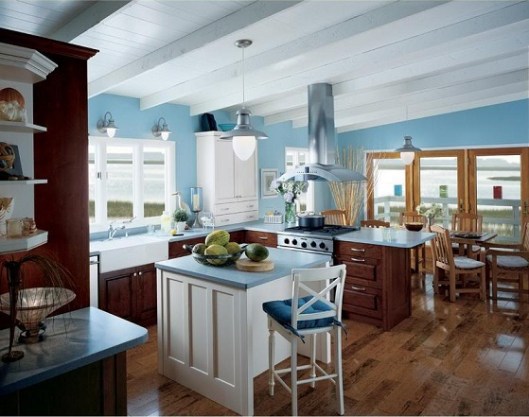
The average custom kitchen can cost upwards of $20,000, but in this poor economy not many people can afford to spend that much. If you’re willing to put in some sweat equity, you can have the designer kitchen you want without blowing your budget.

Add a Splash of Color
Bold, bright colors are everywhere; candy-apple reds, sunny yellows, and rich, warm tones are very popular in appliances. Electrical stores and kitchen specialists offer a huge range of products to suit all budgets, look for established brands Neff, Zanussi and Caple and do your research to find top of the line products. Buying your appliances from a discount outlet will give you the high end look you want at a much lower price.

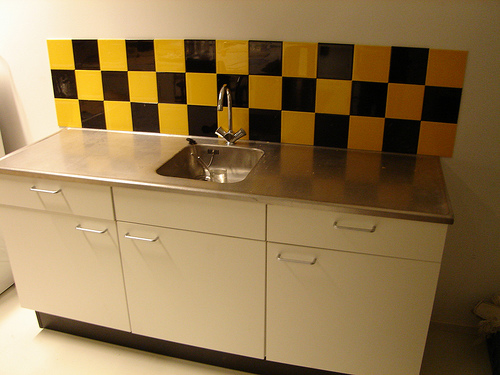
As an alternative to spending thousands on an appliance that will have a permanent place in your kitchen, consider buying changeable panels for your dishwasher, stove and refrigerator. Other less expensive options include freestanding appliances in bright colors, changing lighting fixtures, adding a bright splashback, or re-facing cabinetry and changing hardware. These smaller projects can cost less than $100, but make a big impact.

Guest Post: Creating a Designer Kitchen on a Budget
Photo Credit: Kitchen Cabinet Design Ideas

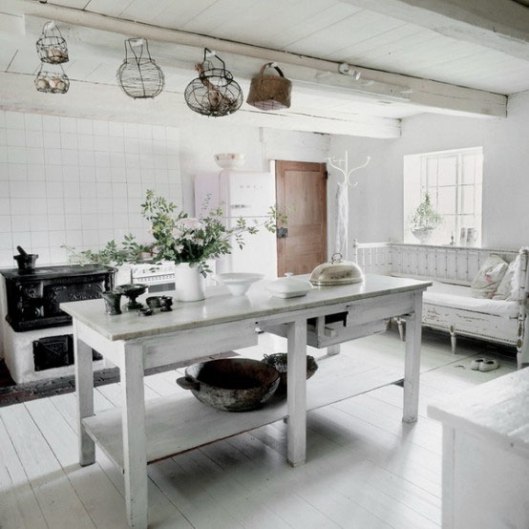
Refurbish Vintage Pieces
Today’s less structured looks can be achieved at a lower cost by taking some styling cues from your family room. Get the look by using different finishes on furniture-style cabinetry; a cheap way to do it is to refurbish old pieces like dressers, armoires, and even rolling carts to create additional storage. For even more personalization, incorporate architectural pieces from the salvage yard.

Guest Post: Creating a Designer Kitchen on a Budget
Photo Credit: Ghoofie Design

Buy Floor Models
Manufacturers such as General Electric, Frigidaire and Caple frequently have stock that’s been slightly damaged; in most cases, the “damage” is a slight scratch that you won’t even see once the appliance is in place. Buying from scratch-and-dent stores or getting a floor or demo model can give you the kitchen you want without breaking the bank.

Shop Smart
Other kitchen necessities can be bought on the cheap as well. Caple sinks, custom cabinets, granite countertops and flooring made of bamboo and other materials are all widely available from discounters both in-store and online. With all the options available, it can be hard to find the look you want at a cost you can afford–online comparison-shopping tools make the process much easier.

Do the Work Yourself
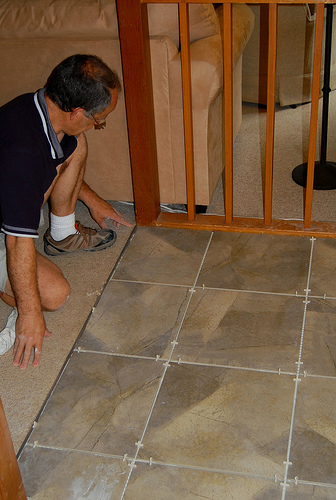
Some of you may be reluctant to get your hands dirty, but going the DIY route can help you get a designer-look kitchen without the designer price tag. Installing your own countertops and splashbacks will give you a tremendous sense of accomplishment (and a fatter wallet). Of course, your pricing will vary depending on the products you choose, but you’ll definitely save on labor.

Guest Post: Creating a Designer Kitchen on a Budget
Photo Credit: CabFabLab

Written by James Harper on behalf of the Kitchen Appliance Centre

← Older posts
Newer posts →
color in films sound in color art inpsired palettes
art and design the home events and parties weddings real weddings color inspiration film-reviews historic places news and updatesminted


minted.com

Enter your email address to follow this blog and receive notifications of new posts by email.

Archives


martha

Magnolia Rouge

Screen Shot 2014-04-23 at 2.29.10 PM

Etsy

Screen Shot 2014-04-23 at 2.18.10 PM

logo

Screen Shot 2014-04-23 at 2.42.13 PM

P&PBlogHeader

wedding chicks


ruffled

Screen Shot 2014-04-23 at 2.47.49 PM

Screen Shot 2014-04-23 at 2.16.32 PM


lauren-elle-photography

jenlombardo

logo_website

site-logo1

kelly_dekenipp_logo

homelogo

Website Powered by WordPress.com.

Privacy & Cookies: This site uses cookies. By continuing to use this website, you agree to their use.
To find out more, including how to control cookies, see here: Cookie Policy
  • Subscribe Subscribed
    • The Design Inspirationalist
    • Join 1,379 other subscribers
    • Already have a WordPress.com account? Log in now.
    • The Design Inspirationalist
    • Subscribe Subscribed
    • Sign up
    • Log in
    • Report this content
    • View site in Reader
    • Manage subscriptions
    • Collapse this bar
 

Loading Comments...