• About
  • Visit Gray Star Design
  • Minted Collection
  • Design Services
  • Contact

The Design Inspirationalist

~ Inspiring Ideas | Spectacular Creations

The Design Inspirationalist

Tag Archives: colonial

Inspiration Photo Friday: Beyond the Door

31 Friday Aug 2012

Posted by melissaoconnor in Inspiration Photo Friday

≈ 1 Comment

Tags

colonial, color, door, earth, fantasy, nature, neutral, new york, sleepy hollow, stone, wood

This is another great shot from my visit to Sleepy Hollow, NY. Besides the colonial style building, I fell in love with the texture and color of its door. Appearing strong and somewhat medieval, this entrance simply leads to the inside of the home. But what can you imagine it leading to? A different realm of unconsciousness, a fantasy world of endless farmland and evergreen forests. If you use your imagination, anything is possible. Wouldn’t it be cool if this was the front door to your home? I would love that!

If you look at the image as a whole, you will notice the neutral yet beautiful color palette of earthy tones and calm hues. It’s a perfect inspiration for interiors as well as events such as weddings. See the color palette I created to help lead you in the right direction.

Inspiration Photo Friday: Beyond the Door - Copyright 2012 Melissa O'Connor-Arena.

beyond the door palette

Historic Series: The Joseph Lloyd Manor

07 Thursday Jun 2012

Posted by melissaoconnor in Historic Places

≈ Leave a comment

Tags

Abner Osbor, architecture, arts, colonial, design, federal, federal style architecture, historical, history, house, huntington, Joseph Lloyd Manor, lloyd harbor, manor, mortise and tenon, nature, new york

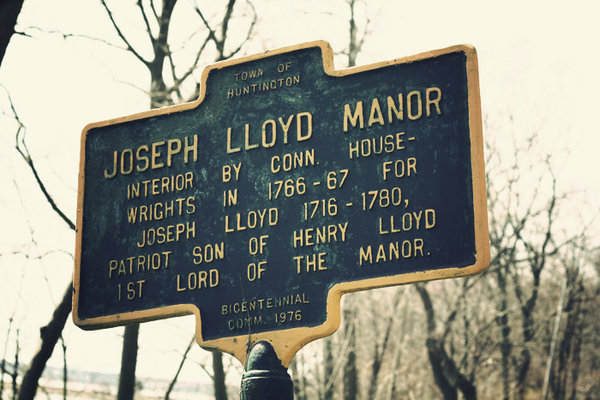
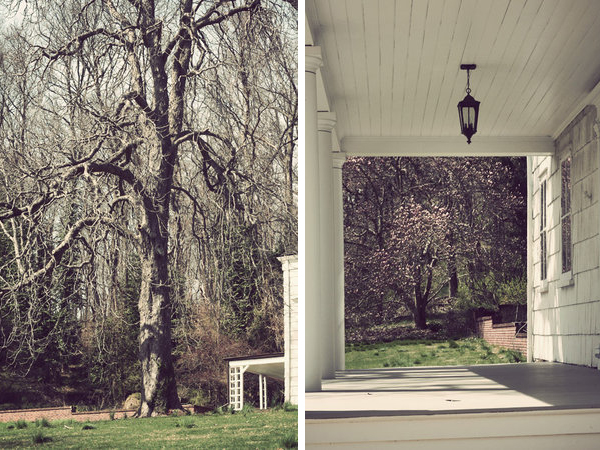
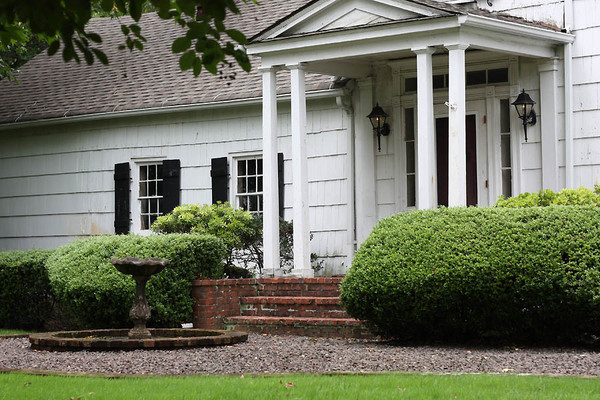
Part of the Lloyd family land, the Manor house was built in 1766 by Joseph Lloyd after his father Henry passed away. Overlooking the harbor, the Manor sits on 2 acres of land in Huntington, New York and shows off its federal style architecture beautifully.

Historic Series: The Joseph Lloyd Manor - Copyright 2012 Melissa O'Connor

It’s symmetry and clean design is the result of the timber framed technique which is done by jointing heavy timbers by use of mortise and tenon. This joint technique has been used by woodworkers for thousands of years and became familiar to stonemasons and blacksmiths soon after.

Historic Series: The Joseph Lloyd Manor - Copyright 2012 Melissa O'Connor

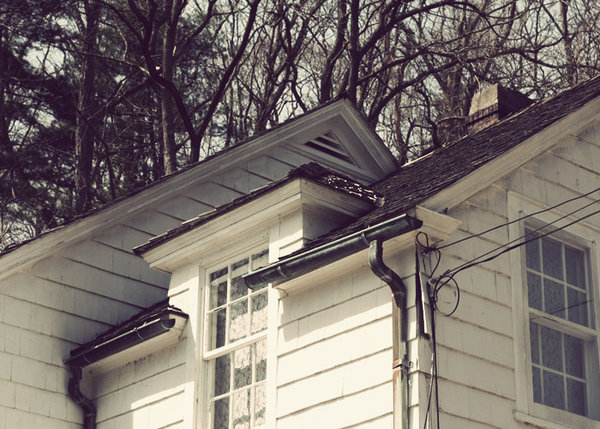
The original gable roof is clearly defined as well. This style and shape was often found in gothic architecture and was a big part of 18th century design. During the 19th century some adjustments were made to the house and even more toward the 20th century when it changed ownership. However, original elements of the house still can be found such as the crown molding, wainscoting, staircase, banister and paneled fireplace. You will also find that the kitchen still has its vintage style hearth and bake oven.

Historic Series: The Joseph Lloyd Manor - Copyright 2012 Melissa O'Connor

Historic Series: The Joseph Lloyd Manor - Copyright 2012 Melissa O'Connor

The interior elements of the house were designed by Connecticut born carpenter Abner Osborn. He was recommended by Joseph’s brother James and worked on the project with four apprentices. They completed the exterior sheathing of the house as well as the doors, windows and interior paneling and molding.

Historic Series: The Joseph Lloyd Manor - Copyright 2012 Melissa O'Connor

There has been a number of owners and guests of the Manor house and some that have even rented it for some time. In 1940 it was leased by Charles Lindbergh who needed an escape from the chaos of his son’s kidnapping. During the Revolutionary War, American troops also built a fort on the west end of the Manor property (now Caumsett) and stayed in the house as well.

During the time of the war Joseph was the only Lloyd family member to remain on the land and was joined by Jupiter Hammon, the famous slave whom he inherited when his father died. Eventually British troops took over and forced them to leave. Joseph then traveled to Hartford, Connecticut in 1776 with Hammon by his side. Later in 1780, he took his own life and Hammon was passed down to his nephew since he had no children of his own.

Historic Series: The Joseph Lloyd Manor - Copyright 2012 Melissa O'Connor

Today the Society for the Preservation of Long Island Antiquities owns the property and offers tours to the public. It is also listed on the National Register of Historic Places.  If you haven’t made a visit to the Manor house I suggest that you do. Especially now that the nice weather is here. Whether you take a tour or not, you can appreciate its beauty and design and maybe even get inspired to step back into time to explore your own history. Remember, when you look into the past you can have a new view into the future.

Historic Series: The Jackson Homestead

23 Friday Mar 2012

Posted by melissaoconnor in Historic Places

≈ 1 Comment

Tags

colonial, historic, homes, jackson, jackson homestead, long island, nassau county, new york, wantagh, wantagh ave

The Jackson family played a valuable part in the history of Nassau County, particularly in Wantagh. Robert Jackson came from Connecticut around 1644 and had acquired land in the area and for three centuries it remained in the family.

Historic Series: The Jackson Homestead - Copyright Melissa O'Connor 2012

Although many Jackson family members were important figures in the Town of Hempstead they were also farmers. The Jackson homestead, which sits on 1542 Wantagh Ave., was built by Samuel Jackson in the mid 18th century and was the main house on the farm. The home was a one and one-half story structure designed in simple colonial fashion.

The home features a main central hearth with a room on each side and a sleeping loft. The entrance, facing Island Road, showcases a six-panel door with a five-light transom and three-pane sidelights as well as columns that frame the stairs. Its six-over-six double-hung sash windows are pure Colonial Revival design.

Historic Series: The Jackson Homestead - Copyright Melissa O'Connor 2012{The main structure built by Samuel Jackson in the 18th century}

Historic Series: The Jackson Homestead - Copyright Melissa O'Connor 2012{The entrance of the original structure features a six panel door, a five-light transom and three-pane sidelights}

Historic Series: The Jackson Homestead - Copyright Melissa O'Connor 2012
{The original main entrance}

Historic Series: The Jackson Homestead - Copyright Melissa O'Connor 2012
{A small gothic style window is placed between the main hearth}

About a century later Elbert Jackson, an eighth generation descendant, inherited the property and built a large two story addition to the home on its north side. The one-story clapboard porch is held up by three-square columns and has a flat roof. The door sits between two windows similar to the original structure.
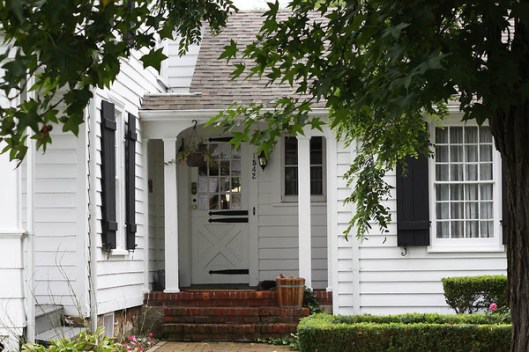
Historic Series: The Jackson Homestead - Copyright Melissa O'Connor 2012{One of the later additions}

The home remained in Elbert’s name until 1884 when he passed away. Since then the property was no longer within the Jackson family. The remaining wing extensions on the north and west side of the home were added later but at different times. They both have a gable roof and are a smaller in size.
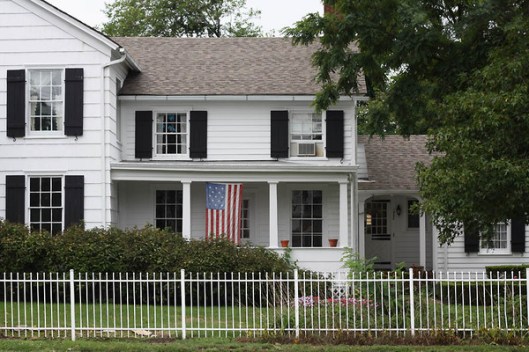
Historic Series: The Jackson Homestead - Copyright Melissa O'Connor 2012{The two-story addition built by Elbert Jackson in the 19th century}

The L-shaped home in its entirety clearly represents the Greek Revival style while keeping with the colonial aesthetic. Its original construction still has the stone and brick foundation as well as 12 inch wood shingles showing the traditional nailing pattern of that period. Although it has gone through many additions, the design is cohesive and true to its original style.

This landmark is a great example of how modern developments inspire domestic life. The home has stood the test of time and has proven its importance through its owners. The Jackson family homestead is one of the few historic homes of its kind still standing today. With Wantagh keeping this homestead’s spirit alive we can appreciate it for years to come.

Historic Series – The Rogers House

20 Tuesday Mar 2012

Posted by melissaoconnor in Historic Places

≈ 1 Comment

Tags

architecture, colonial, frieze, greek revival, historic, homes, houses, huntington, new york, red, rogers house, saltbox

Historic homes have always been a love of mine. They can be found all over but I have had the chance to explore a few towns in New York for a column I used to have for Patch and I wanted to share them with my new readers. These will be part of my new Historic Series and I am very excited about it.

I have done a great deal of research for most of these homes as well as photograph them and it was fun while it lasted. The towns are Huntington, Bellmore, Wantagh and Seaford and they all have hidden gems worth seeing. Although some are not as hidden as others, they are still interesting to say the least.

I am hoping this series will inspire all of you to take a step back and appreciate the past. Sometimes history can give you a new outlook for the future. So enjoy the historic places I have explored and grab any inspiration you can. First up, The Rogers House. Enjoy!

Historic Series: The Rogers House - Copyright Melissa O'Connor 2012

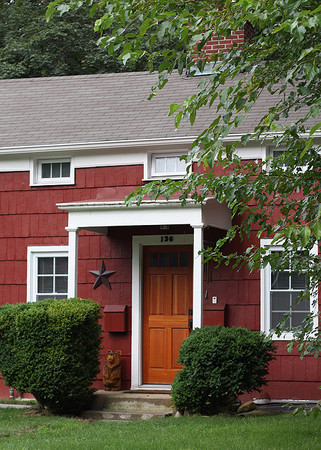
There are many historic homes in Huntington, all easily identified by their style and design. The Rogers House is one of those homes. Located at 136 Spring Road, this red-shingled home was built in 1820 and is a significant example of settlement period architecture.

Since its construction, the home has had about seven owners but the building is named after its second 1836 owner, Rogers, because the first one is not known.  Its saltbox design is composed of a five-bay, center hall plan and sits on a three-quarter acre lot.

Historic Series: The Rogers House - Copyright Melissa O'Connor 2012

The front entrance has a door with simple molded surround and a small covered porch.  There are five original three-pane windows along the top of the home (frieze) and a side entrance has a roofed porch with square columns. There is also a small shed like structure attached to the left side of the house.  The original nine-over-six double hung windows were replaced in the early twentieth century.

Historic Series: The Rogers House - Copyright Melissa O'Connor 2012

This is one of few homes that represent the five-bay center-entrance plan in Huntington that remains somewhat unaltered.  It was built as a single residence and includes numerous details of the Greek Revival style.  These would be the frieze with three-pane windows, the corner pilasters and its main entrance surround.

Most of the larger homes built in the late 19th Century have been demolished or had many alterations. The Rogers home, along with the Stewart and Funnel Houses, are surviving examples of the period that show a high level of craftsmanship, design and historical value.

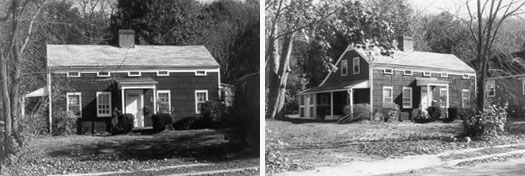
{Here is the Rogers House in 1984}
Historic Series - The Rogers House

← Older posts
color in films sound in color art inpsired palettes
art and design the home events and parties weddings real weddings color inspiration film-reviews historic places news and updatesminted


minted.com

Enter your email address to follow this blog and receive notifications of new posts by email.

Archives


martha

Magnolia Rouge

Screen Shot 2014-04-23 at 2.29.10 PM

Etsy

Screen Shot 2014-04-23 at 2.18.10 PM

logo

Screen Shot 2014-04-23 at 2.42.13 PM

P&PBlogHeader

wedding chicks


ruffled

Screen Shot 2014-04-23 at 2.47.49 PM

Screen Shot 2014-04-23 at 2.16.32 PM


lauren-elle-photography

jenlombardo

logo_website

site-logo1

kelly_dekenipp_logo

homelogo

Website Powered by WordPress.com.

Privacy & Cookies: This site uses cookies. By continuing to use this website, you agree to their use.
To find out more, including how to control cookies, see here: Cookie Policy
  • Subscribe Subscribed
    • The Design Inspirationalist
    • Join 1,379 other subscribers
    • Already have a WordPress.com account? Log in now.
    • The Design Inspirationalist
    • Subscribe Subscribed
    • Sign up
    • Log in
    • Report this content
    • View site in Reader
    • Manage subscriptions
    • Collapse this bar
 

Loading Comments...