• About
  • Visit Gray Star Design
  • Minted Collection
  • Design Services
  • Contact

The Design Inspirationalist

~ Inspiring Ideas | Spectacular Creations

The Design Inspirationalist

Tag Archives: lloyd harbor

Historic Series: The Henry Lloyd Manor

14 Thursday Jun 2012

Posted by melissaoconnor in Historic Places

≈ 1 Comment

Tags

african american poet, architecture, caumsett park, henry lloyd, historic, history, jupiter hammon, lloyd family, lloyd harbor, long island, nature, new york, red, slaves

Henry Lloyd, a famous descendant of the Lloyd family, came to New York in 1711 and decided to take over his father’s land. The 3,000 acres located on Lloyd Neck was the perfect place to start a business and provide for a family. Considering he already owned a successful business in Boston this new venture was sure to bring fortune and happiness.
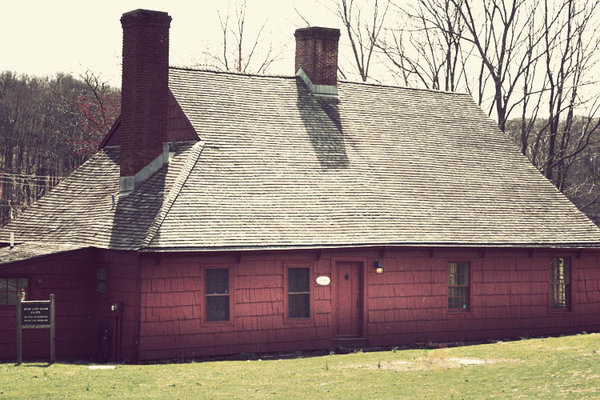
Historic Series: The Henry Lloyd Manor - Copyright 2012 Melissa O'Connor

Historic Series: The Henry Lloyd Manor - Copyright 2012 Melissa O'Connor

When he arrived he had six slaves and some goods that were considered valuable at the time such as bibles and needles. He had just gotten married three years earlier and was ready to start a family. The first Manor house was built for him and his wife Rebecca on the edge of Caumsett Park in March of that same year. Ten children came out of the marriage and after Rebecca died James married another woman, Mary.

Historic Series: The Henry Lloyd Manor - Copyright 2012 Melissa O'Connor

After some time they acquired more slaves to work on the property including Jupiter Hammon. Jupiter was the first African-American poet that was published in the United States and was very close to the Lloyd family. Henry used the land very wisely and eventually cleared space to raise sheep, grow orchards and construct more buildings. After all his work the Manor became self sufficient with food, clothing, education and farms. Henry even imported apple trees to make cider which brought even more profit to the estate.

Historic Series: The Henry Lloyd Manor - Copyright 2012 Melissa O'Connor

Historic Series: The Henry Lloyd Manor - Copyright 2012 Melissa O'Connor

Not only was Henry a clever businessman but he was also a great leader. With his direction the Manor was a famous spot for trade as well as its natural recourses. The Lloyd family had everything they needed from food and goods to clothing and housing. When Henry passed away in 1763 he left the Manor to his sons. Having paid for his son James’ education his portion of the land was less than the others and since his other son James had died at age thirteen he left money to his daughters and grandchildren. Jupiter Hammon received a nice sum of money as well.

Historic Series: The Henry Lloyd Manor - Copyright 2012 Melissa O'Connor

Historic Series: The Henry Lloyd Manor - Copyright 2012 Melissa O'Connor

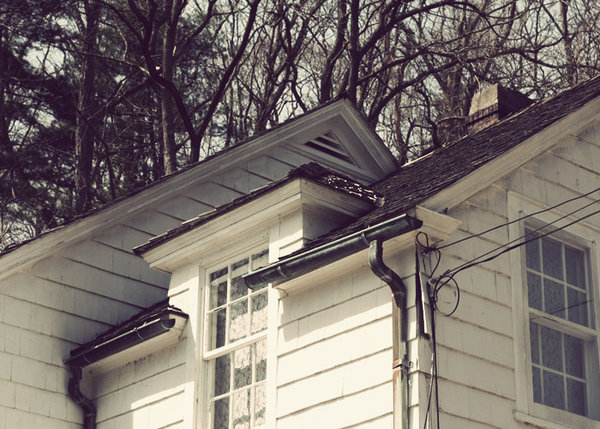
What is left of Henry’s legacy is the Manor house which is of post-medieval architectural design. This 17th century style is famous for its steep roofs, timber frame construction and small casement windows. They most often contained large chimneys and large fireplaces for cooking as well. It originally evolved from Romanesque architecture and was used throughout the Renaissance. In 1722 the house was enhanced with two attachments, one on the side and the other at the back. The kitchen was located in this side addition which had a chimney of its own.

Historic Series: The Henry Lloyd Manor - Copyright 2012 Melissa O'Connor

Today the Manor house is preserved and maintained by the Lloyd Harbor Historical Society. It stands on Caumsett State Park grounds and sits next to the George Weir Barn which was constructed a year after Henry died.
Historic Series: The Joseph Lloyd Manor

07 Thursday Jun 2012

Posted by melissaoconnor in Historic Places

≈ Leave a comment

Tags

Abner Osbor, architecture, arts, colonial, design, federal, federal style architecture, historical, history, house, huntington, Joseph Lloyd Manor, lloyd harbor, manor, mortise and tenon, nature, new york

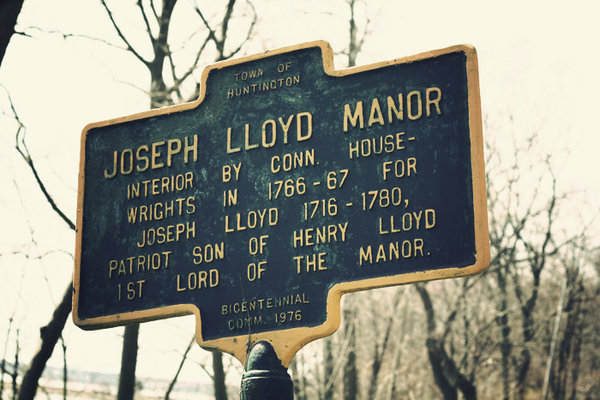
Part of the Lloyd family land, the Manor house was built in 1766 by Joseph Lloyd after his father Henry passed away. Overlooking the harbor, the Manor sits on 2 acres of land in Huntington, New York and shows off its federal style architecture beautifully.

Historic Series: The Joseph Lloyd Manor - Copyright 2012 Melissa O'Connor

It’s symmetry and clean design is the result of the timber framed technique which is done by jointing heavy timbers by use of mortise and tenon. This joint technique has been used by woodworkers for thousands of years and became familiar to stonemasons and blacksmiths soon after.

Historic Series: The Joseph Lloyd Manor - Copyright 2012 Melissa O'Connor

The original gable roof is clearly defined as well. This style and shape was often found in gothic architecture and was a big part of 18th century design. During the 19th century some adjustments were made to the house and even more toward the 20th century when it changed ownership. However, original elements of the house still can be found such as the crown molding, wainscoting, staircase, banister and paneled fireplace. You will also find that the kitchen still has its vintage style hearth and bake oven.

Historic Series: The Joseph Lloyd Manor - Copyright 2012 Melissa O'Connor

Historic Series: The Joseph Lloyd Manor - Copyright 2012 Melissa O'Connor

The interior elements of the house were designed by Connecticut born carpenter Abner Osborn. He was recommended by Joseph’s brother James and worked on the project with four apprentices. They completed the exterior sheathing of the house as well as the doors, windows and interior paneling and molding.

Historic Series: The Joseph Lloyd Manor - Copyright 2012 Melissa O'Connor

There has been a number of owners and guests of the Manor house and some that have even rented it for some time. In 1940 it was leased by Charles Lindbergh who needed an escape from the chaos of his son’s kidnapping. During the Revolutionary War, American troops also built a fort on the west end of the Manor property (now Caumsett) and stayed in the house as well.

During the time of the war Joseph was the only Lloyd family member to remain on the land and was joined by Jupiter Hammon, the famous slave whom he inherited when his father died. Eventually British troops took over and forced them to leave. Joseph then traveled to Hartford, Connecticut in 1776 with Hammon by his side. Later in 1780, he took his own life and Hammon was passed down to his nephew since he had no children of his own.

Historic Series: The Joseph Lloyd Manor - Copyright 2012 Melissa O'Connor

Today the Society for the Preservation of Long Island Antiquities owns the property and offers tours to the public. It is also listed on the National Register of Historic Places.  If you haven’t made a visit to the Manor house I suggest that you do. Especially now that the nice weather is here. Whether you take a tour or not, you can appreciate its beauty and design and maybe even get inspired to step back into time to explore your own history. Remember, when you look into the past you can have a new view into the future.

Historic Series: The Lloyd Family Manor

05 Tuesday Jun 2012

Posted by melissaoconnor in Historic Places

≈ Leave a comment

Tags

An Evening's Thought: Salvation by Christ, antique, caumsett, causeway, cottage, farm, farmers, Grissel Sylvester, henry lloyd, historic, history, huntington, jupiter hammon, lloyd harbor, lloyd manor, new york, oyster bay, religion, slavery, slaves, stable, vintage

I have always loved items and architecture that have that a true vintage appeal to them. My curiosity has always led me to historic places. There is something about the story behind the location as well as the construction that intrigues me. So it made sense that the Lloyd Manor in Huntington, New York would be on my list and I must say that I was very happy with what I captured during my visit.

Historic Series: The Lloyd Family Manor - Copyright 2012 Melissa O'Connor

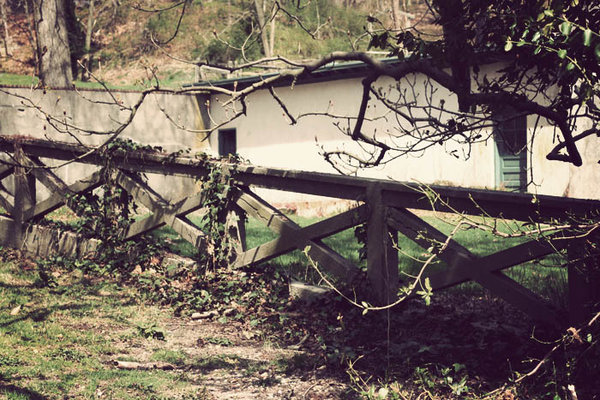
As I turned off Lloyd Harbor Road I spotted numerous buildings on the right and immediately felt excited. I pulled over and started to explore this fascinating place. The farm area was my first stop. It was a relief to see that some of the buildings were showing their old age. Not that I don’t like restoration projects but I am more a fan of things in their natural state.

Historic Series: The Lloyd Family Manor - Copyright 2012 Melissa O'Connor

Historic Series: The Lloyd Family Manor - Copyright 2012 Melissa O'Connor

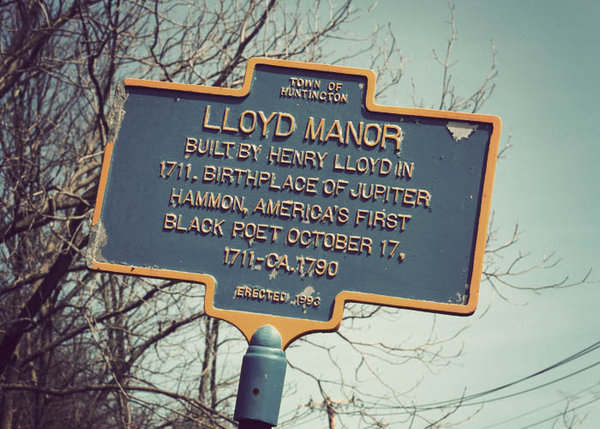
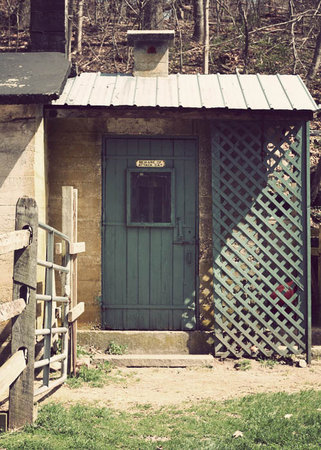
The Manor was built in 1711 and I wanted to capture the essence of that time. As I continued on my journey I spotted a white and black cat just hanging out in a small alley. Was this the “attack cat” who was mentioned on the door sign? If so, I don’t think he is that scary!

Historic Series: The Lloyd Family Manor - Copyright 2012 Melissa O'Connor

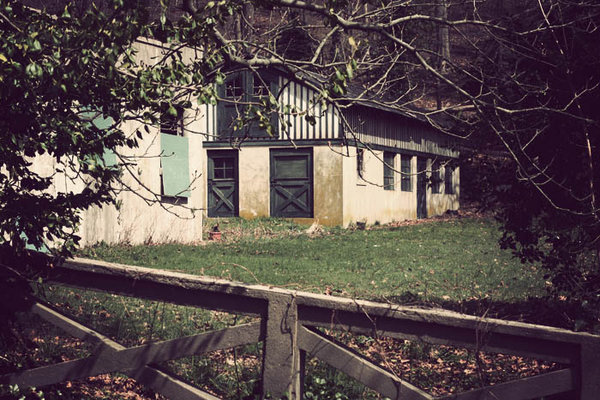
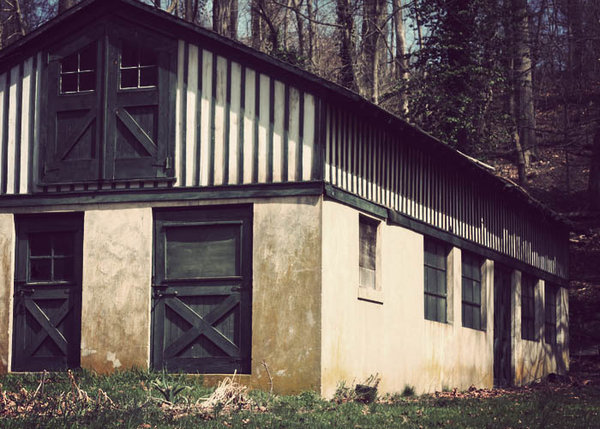
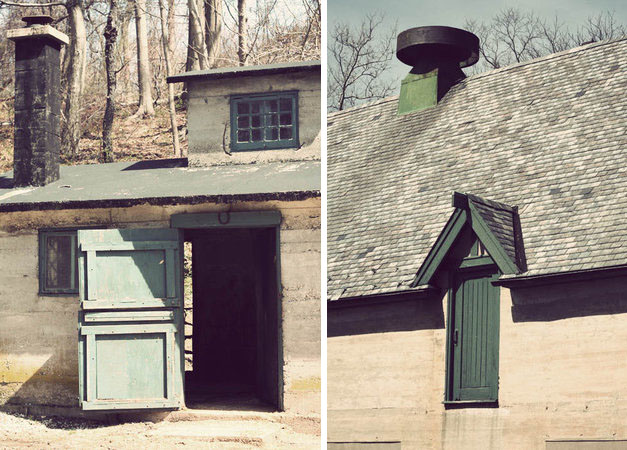
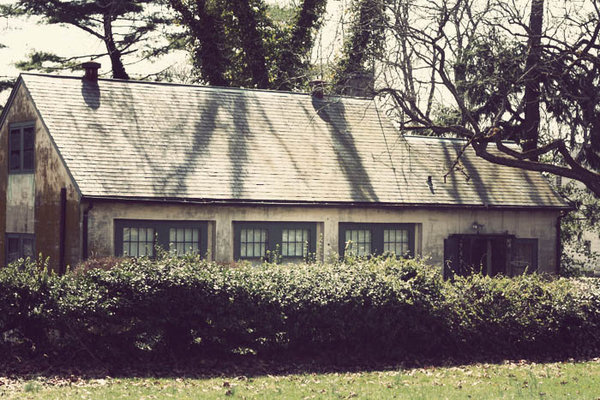
I moved on toward the barn and stable area and found that this was my favorite set of buildings. My walk over there was interesting enough with the cracked stone walls. Some revealed old brick that housed weeds and ivy. The main building was connected to the stables and the barn had a small chicken coop area to its right.

Historic Series: The Lloyd Family Manor - Copyright 2012 Melissa O'Connor

Historic Series: The Lloyd Family Manor - Copyright 2012 Melissa O'Connor

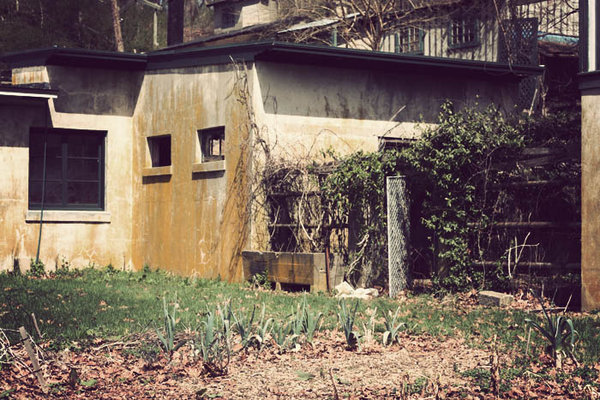
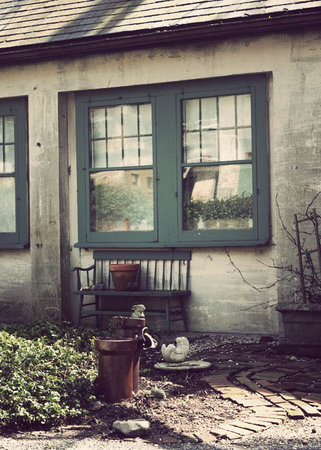
I really loved how the muted clay color of the stone was slightly set back from the dark green of the window frames and doors. It seemed to match well with the greenery and natural setting its surrounded by. I also thought it was convenient that everything was connected either by a gate or a path. It brought the whole Manor together as a whole instead of breaking up all the buildings.

Historic Series: The Lloyd Family Manor - Copyright 2012 Melissa O'Connor

Historic Series: The Lloyd Family Manor - Copyright 2012 Melissa O'Connor

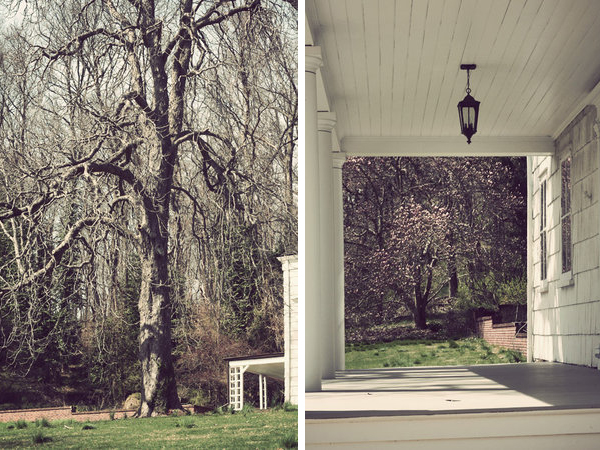
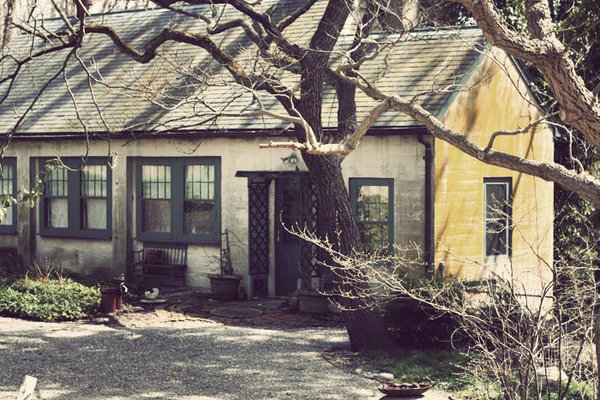
The cottage at the end of the Manor was adorable and quaint. It followed the same design as the other buildings and a nice amount of land for gardening. I can imagine how nice it was to take in the view while relaxing on a summers night. The beautiful trees that guard the Manor are mesmerizing. It is no doubt they have seen amazing things.

Historic Series: The Lloyd Family Manor - Copyright 2012 Melissa O'Connor

Historic Series: The Lloyd Family Manor - Copyright 2012 Melissa O'Connor

The Lloyd family has owned this land for two centuries. Spawning out past Caumsett, the 3,000 acres allowed them to build numerous housing, construct buildings such as the Manor and have access to the natural resources that surrounded it. James Lloyd bought the land in 1676 when he married Grissel Sylvester and rented it out to farmers. In 1711 his son Henry decided to keep up the land and make it more successful. In 1763 Henry passed away and his son, Joseph, decided to build a larger home on the property three years later.

Historic Series: The Lloyd Family Manor - Copyright 2012 Melissa O'Connor

Jupiter Hammon, one of the slaves Joseph inherited by his father, was born and raised on the Manor amongst the other Lloyd children. He was fifty-two when Henry passed. A stocky man with a white beard, Jupiter was smart and educated. He wound up becoming a trusted employee of the Lloyd family as well as assisting Joseph to Connecticut to escape the British. At a young age, Jupiter had attended the Lloyd schoolhouse and learned to read and write. When he was twenty-two years of age he raised enough money from his own garden to buy a bible from the Lloyd family. He was a strict Christian and acted as a preacher to the other 10 known slaves.

Historic Series: The Lloyd Family Manor - Copyright 2012 Melissa O'Connor

Jupiter is also the first black poet in America to be published. His piece, An Evening’s Thought: Salvation by Christ, with Penitential Cries, was published on December 25, 1760 at the age of 50. Jupiter’s parents, Opium and Rose, were both slaves as well. In 1780 after Joseph died Jupiter was given to his nephew because he had no children of his own. Being a slave all his life, he passed away between 1790 and 1806 having published about 7 or so works during his life most of which were his later years.

Historic Series: The Lloyd Family Manor - Copyright 2012 Melissa O'Connor

The Manor was kept by several generations of the Lloyd family so you can understand how important it is to Huntington. Henry Lloyd IV was the last owner of the land acquiring it in 1841 and built an addition to the property near the Causeway. The new dock he constructed was intended for the local steamboats. Between then and 1885 the area was still underdeveloped until the Manor was legally made a part of Huntington and finally separated from Oyster Bay.

For such a small part of Huntington this area holds many treasures and shares unbelievable history. I recommend you visit the Lloyd Manor for yourself and take a look around. It really is striking how time tells stories. Important and valuable people came out of this area and helped to make it successful. Their hard work, bravery and ambition put the Lloyd family on the map and left the Manor for all of us to hold close to our hearts.

{Next in the Lloyd Family series: Joseph Lloyd Manor House}

Historic Series: The Karpen House

06 Friday Apr 2012

Posted by melissaoconnor in Historic Places

≈ 4 Comments

Tags

antque, daniel karpen, historic homes, history, huntington, karpen house, keith hibner, lloyd harbor, long island, morris karpen, new york, vintage

I love historic areas because they hold so many memories. Huntington has so much to explore. On one of my explorations I visited the Karpen House in Lloyd Harbor. Usually, I try not to bother residents but this time I was compelled to knock on the door. When I pulled up on Harbor Hill Drive, the house seemed a little buried within the trees. In order for me to get some good photos, I had to go meet who lived inside.

Historic Series: The Karpen House - Copyright 2012 Melissa O'Connor

Historic Series: The Karpen House - Copyright 2012 Melissa O'Connor

Daniel Karpen met me at the door and welcomed me inside to check out the house. He gave me tons of written materials so I had the information I needed. He was also nice enough to give me a tour of the interior and pointed out the historic elements of the home. I was really in awe of some of the original elements that remained and honestly, quite surprised they were in such good shape.

The kitchen was one of my favorite stops because I love vintage appliances. The blue General Electric oven and stove were awesome. The stainless steel sink was also never replaced. The small green house that was attached to the back of the kitchen was adorable. I would love to have one of those!

Historic Series: The Karpen House - Copyright 2012 Melissa O'Connor

Historic Series: The Karpen House - Copyright 2012 Melissa O'Connor

As we continued forward, I was really taken aback by some of the design choices of the architect. Since the house was built in the mid-1950s, I could appreciate the clean lines and subtle modern touches. With all the dark wood furniture and the granite fireplace, the living room held a warm and natural feeling. The original floor had been cork tile, but it was replaced with ceramic in 1961.

Historic Series: The Karpen House - Copyright 2012 Melissa O'Connor

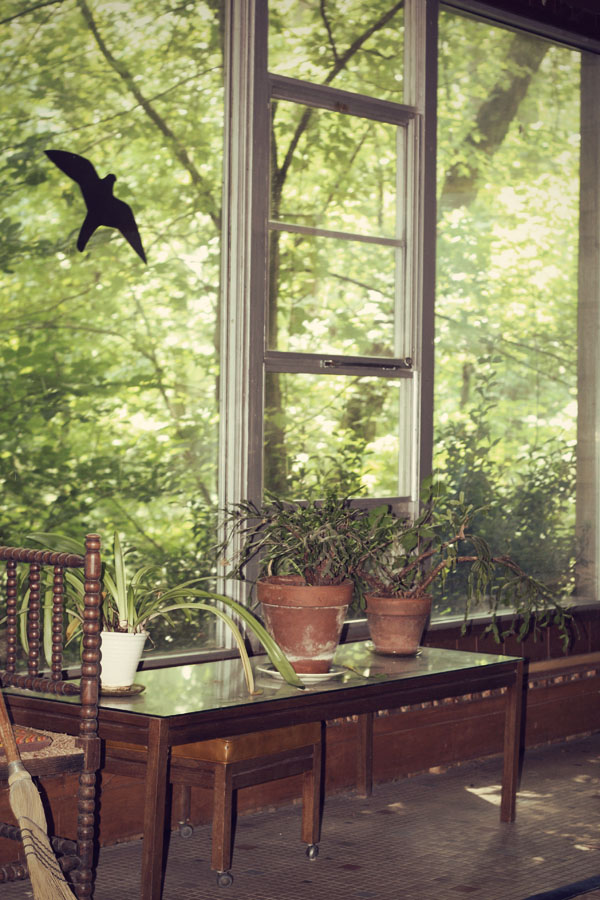
Its best feature? The windows. With an 11-foot ceiling, these huge thermopane beauties allowed nature to literally become part of the house. How awesome is that?

Historic Series: The Karpen House - Copyright 2012 Melissa O'Connor

Historic Series: The Karpen House - Copyright 2012 Melissa O'Connor

Historic Series: The Karpen House - Copyright 2012 Melissa O'Connor

Historic Series: The Karpen House - Copyright 2012 Melissa O'Connor

The closets throughout the house were original as well as the doors and room panelling. The basement was very unique in that it didn’t feel like a basement at all. Who ever heard of a basement with ten-foot ceilings? So unbelievably cool.

Karpen told me his father was claustrophobic so you can understand the need for space. The house also sits on a hill, so when you look out the windows its seems as if you are on the first floor. Because Karpen does woodwork and builds furniture, he has transformed the space into his studio. He has such a big wood collection, you wonder where he gets it all. I also enjoyed seeing his collection of vintage tools.

Historic Series: The Karpen House - Copyright 2012 Melissa O'Connor

Historic Series: The Karpen House - Copyright 2012 Melissa O'Connor

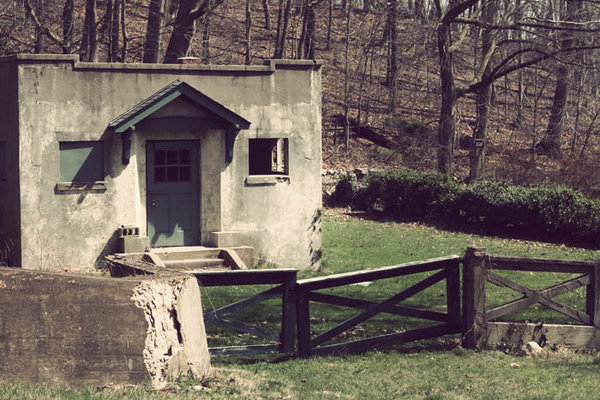
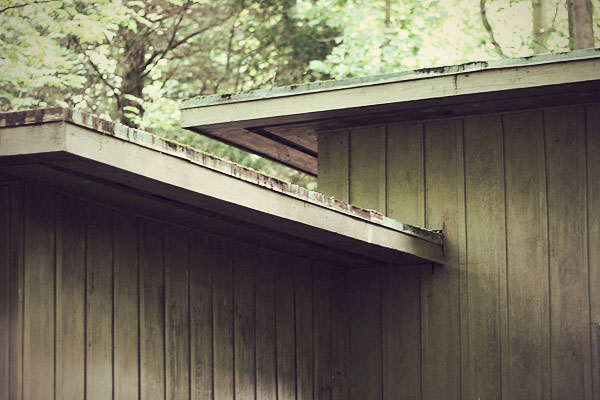
After our little tour of the inside, we walked outside to get some more photos. It was a bit tricky with all the trees but I must say it was quite beautiful. These trees are vital to the home because they give it shade which the house needs because it does not have air conditioning. Built in 1955, the international-style home in Lloyd Harbor is a long, low residence surmounted by a flat roof with overhanging eaves. The roof is also a green roof and covered in moss. Having a flat roof does have its advantages.

Historic Series: The Karpen House - Copyright 2012 Melissa O'Connor

Historic Series: The Karpen House - Copyright 2012 Melissa O'Connor

Historic Series: The Karpen House - Copyright 2012 Melissa O'Connor

Historic Series: The Karpen House - Copyright 2012 Melissa O'Connor

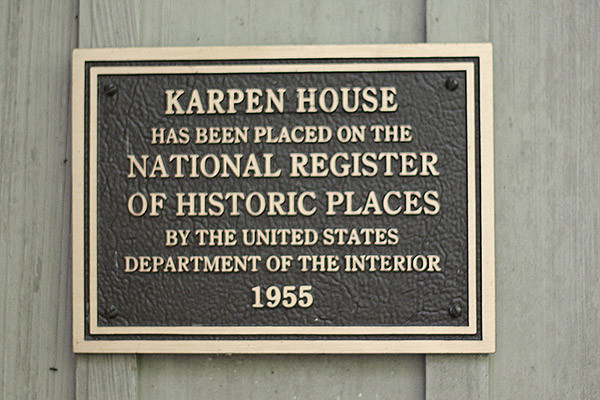
The Karpen House represents a vernacular interpretation of the Modern style and was added to the National Register of Historic Places in 2006. There also used to be a tree house in the backyard but was taken down in the 1970s due to the growth of the tree. That would have been really cool to see.

From first glance, the Karpen House might look a little disheveled but there are many treasures that lie within it. Karpen grew up here and now resides in the home which was designed by architect, Keith Hibner and built by his father, Morris. The main inspiration of the house was an Oregon home showcased in the 1951 issue of Architectural Record. It was designed by Pietro Belluschi who is a very well known architect.

Historic Series: The Karpen House - Copyright 2012 Melissa O'Connor

The Karpen family was well established and Morris was very active in politics once he moved to Huntington. He was the chairman of the Suffolk County Liberal Party as well as being a part of the capital budget committee. His main source of income was his steel plant in Farmingdale where he manufactured steel doors and frames, some of which you will see in the home itself. Once he moved to Asheville, N.C., in 1977 the plant was run by his son Seth and business partner Harold Kardeman until 1995 when it was sold. Morris passed away on March 3, 2002 and his daughter Rachel now runs the plant located in Weaverville, N.C.

You see, in all the many houses of Huntington here is one that really helped the world evolve. It housed smart individuals that really made a difference and contributed a good amount of time, effort and knowledge to their community. Not only does the Karpen House exude style and functionality, it continues to tell the story of the family who created it. The fact that it’s still standing today proves to all of us that love is the master of time and with a little TLC and memories by your side you can keep anything alive.

color in films sound in color art inpsired palettes
art and design the home events and parties weddings real weddings color inspiration film-reviews historic places news and updatesminted


minted.com

Enter your email address to follow this blog and receive notifications of new posts by email.

Archives


martha

Magnolia Rouge

Screen Shot 2014-04-23 at 2.29.10 PM

Etsy

Screen Shot 2014-04-23 at 2.18.10 PM

logo

Screen Shot 2014-04-23 at 2.42.13 PM

P&PBlogHeader

wedding chicks


ruffled

Screen Shot 2014-04-23 at 2.47.49 PM

Screen Shot 2014-04-23 at 2.16.32 PM


lauren-elle-photography

jenlombardo

logo_website

site-logo1

kelly_dekenipp_logo

homelogo

Website Powered by WordPress.com.

Privacy & Cookies: This site uses cookies. By continuing to use this website, you agree to their use.
To find out more, including how to control cookies, see here: Cookie Policy
  • Subscribe Subscribed
    • The Design Inspirationalist
    • Join 1,380 other subscribers
    • Already have a WordPress.com account? Log in now.
    • The Design Inspirationalist
    • Subscribe Subscribed
    • Sign up
    • Log in
    • Report this content
    • View site in Reader
    • Manage subscriptions
    • Collapse this bar
 

Loading Comments...